The CMO’s Guide to Outsourcing Customer Support: What Nobody Tells You
I’ll start with the contrarian take: most CMOs who outsource customer support are solving the wrong problem.
They’re treating CX as a cost line to optimize. Their CFO has asked them to cut 20% from the support budget, so they go shopping for vendors who can deliver the same SLAs at 50% less. They pick the cheapest one that passes procurement. Six months later, CSAT is down 8 points, refund rates are up, and the senior leadership is asking why.
The actual problem isn’t cost. It’s that customer support is one of the highest-leverage brand and revenue functions you have, and most CMOs aren’t treating it that way.
This guide is for the CMO who’s about to sign — or already has signed — an outsourcing contract and wants to make sure they’re getting it right. Not the generic vendor list. The strategic reframing.
TL;DR
Customer support outsourcing isn’t a cost decision. It’s a brand and revenue decision being made by procurement teams who treat it like buying paper towels.
Three things flip the outcome:
- Reframe support as a revenue function, not a cost center. The vendors who win are the ones who understand this, not the ones who promise the lowest CPI.
- Match the engagement type to the right vendor tier. Hyper-growth SaaS shouldn’t buy from enterprise BPM giants. Fortune 500s shouldn’t buy from startup-focused platforms.
- Build the contract for what actually goes wrong — attrition spikes, peak season, scope creep, AI deflection accuracy — not for the marketing deck scenarios.
Get those three right, and outsourced support becomes a CX moat. Get them wrong, and you’ll be hiring an in-house team in 18 months at 3x the cost.
The Question That Reframes Everything
When a CMO asks me “should we outsource customer support?”, I ask them one question back: What percentage of your customer LTV touches a support interaction?
Most can’t answer. Some guess 10–15%.
The real answer for most B2B SaaS and consumer brands is closer to 60–80%. Support touches onboarding completion, second-month retention, expansion conversation, NPS, renewal, churn save, referral intent, and review-site reputation. Every one of those touches money.
Then I ask the second question: Who owns that 60–80% revenue surface in your org chart?
The usual answer is a Director of Customer Support reporting two levels below the CRO or COO. Not a peer of the CMO. Not on the executive team. Not in the boardroom revenue conversation.
This is the misalignment that quietly destroys outsourcing engagements. The people choosing the vendor are optimizing for the wrong scorecard.
The Support Continuum: Where Your Brand Actually Lives
Jason Lemkin’s framing on the SaaStr blog is the cleanest I’ve seen on this. He frames customer support as a continuum from worst to best:
- No support at all → terrible
- Bots only → still awful, even with AI
- Email-only with hour-or-day response → suboptimal
- Live outsourced support → quality varies, but a decent answer right now is 100x better than a similar answer a day later
- Live in-house support, highly trained → best in theory, doesn’t always scale
Most CMOs evaluating outsourcing assume they’re choosing between option 4 and option 5. They’re actually choosing between option 4 and option 3 — because their in-house team doesn’t have the bandwidth to deliver real-time coverage and they end up defaulting to email queues with 12-hour response times.
Gorgias found that 44% of B2B ecommerce vendors thought they provided “world-class” support. Only 1.3% actually did. Average response time across the dataset was 12 hours against a target of under 10 minutes.
That gap between perceived quality and actual quality is where outsourcing earns its place. A properly trained outsourced team responding in 8 minutes beats an in-house team responding in 8 hours every single day.
When Outsourcing Customer Support Actually Works (And When It Doesn’t)
I’ve watched dozens of CX outsourcing engagements over the last few years. The ones that work share specific characteristics. So do the ones that fail.
Where Outsourcing Wins
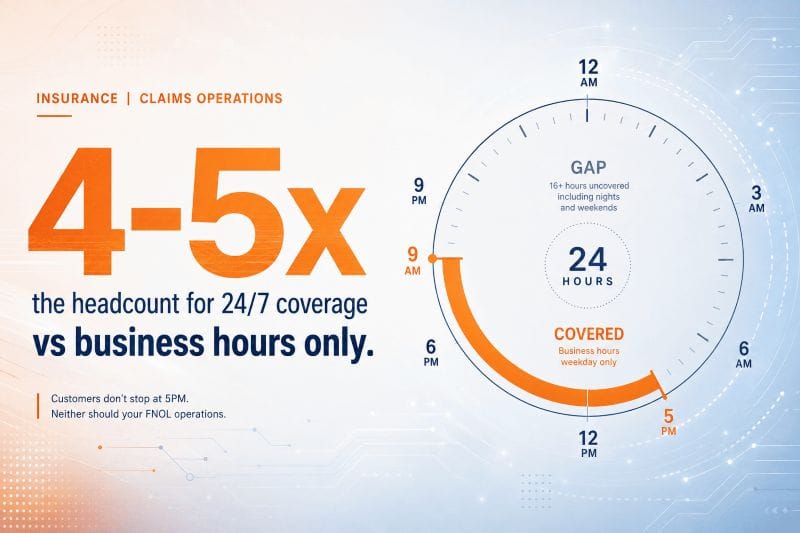
- 24/7 coverage requirements. Your in-house team can’t realistically cover 9 PM to 6 AM EST without burning out senior people. An outsourced team built for this beats night-shift in-house every time.
- Predictable, repeatable workflows. Order tracking, refund processing, account access, password resets, plan changes — anything that can be SOP’d to under 10 decision points performs well outsourced.
- Peak-season elasticity. Black Friday, open enrollment, tax season, product launches. Hiring 30 in-house agents for 6 weeks doesn’t make sense. Scaling an outsourced team 2x for 6 weeks does.
- Multi-channel coverage. Chat + email + voice + social DMs + reviews-site responses across multiple time zones. Outsourced teams scale this naturally.
- Compliance-heavy workflows where the vendor specializes. HIPAA, PCI DSS, GDPR-trained agents are easier to access through specialist vendors than to build in-house.
Where Outsourcing Quietly Fails
- High-judgment, brand-defining moments. Account cancellations from enterprise customers, refund escalations from VIPs, viral complaint threads on social media. These need someone with the authority to make exceptions and a personal stake in the brand.
- Technical product issues requiring engineering context. When the answer requires reading internal Slack threads, checking deployment status, or making a judgment call about whether something is a bug or a feature, outsourcing struggles.
- Highly nuanced B2B customer success at the strategic account level. Your top-10 customers shouldn’t talk to outsourced agents. Period.
- Trust & safety work that requires deep cultural context. Especially for content moderation in markets the vendor doesn’t natively understand.
- Early product stages where the support agent’s feedback is the primary product research loop. Outsourcing this means losing your insight engine.
The pattern is clear: outsource the repeatable, scalable, and bounded. Keep in-house the judgment-heavy, brand-defining, and feedback-driven.
The Four Hidden Failure Modes Nobody Talks About
Every CX outsourcing blog you’ve read covers the obvious failure modes — bad accent, high attrition, poor SLAs. Those are real but they’re not the ones that actually kill engagements.
The four real failure modes:
1. The Procurement-CX Disconnect
Procurement evaluates vendors on RFP rigor, financial stability, and cost per FTE. CX evaluates vendors on CSAT, FCR, and brand alignment. These two scorecards almost never agree. The vendor that wins procurement is rarely the vendor that delivers the best customer outcomes.
The fix: CMO and Head of Support sit in the final vendor selection meeting. Not the RFP scoring phase. The actual decision meeting. They have veto power over the procurement recommendation if the operational fit is wrong.
2. The First-90-Days Trap
Vendors put their A-team on the first 90 days. The ramp-up is smooth, the agents are knowledgeable, your account manager is responsive. Then quietly, between months 4 and 6, the A-team rotates off and the engagement is taken over by the standard pool. CSAT drops 6–8 points. Your QA team starts flagging issues. By month 9, you’re trying to fire the vendor.
The fix: Bake quarterly QA checkpoints into the contract with named individuals. Require notification if your dedicated agents change. Pay slightly more for true dedicated teams instead of shared pools.
3. The Scope Creep Reverse-Negotiation
Six months in, your scope has grown. New product launched, new channels added, new SLAs requested. The vendor agrees to all of it without renegotiating the contract. Six more months in, they come back saying the original pricing is no longer profitable for them and they need a 25% increase or they’re walking. You’re stuck because your in-house team can’t absorb it.
The fix: Define a formal scope change process from day one. Every new requirement triggers either a written addendum or an opt-out. Don’t let scope creep accumulate as a verbal agreement.
4. The AI Deflection False Bottom
Your vendor’s AI agent claims to deflect 40% of tier-1 tickets. Reality: it deflects 20%, frustrates another 15%, and creates a quality complaint pattern your team only sees in the QA reports two months later. You’re now paying for AI that’s making CSAT worse.
The fix: Require monthly AI deflection accuracy reports broken down by ticket type. Set a CSAT floor that triggers AI rollback if breached. Don’t let AI deflection be a vanity metric.
How CMOs Actually Buy Customer Support Outsourcing in 2026
Buying patterns are shifting. Five years ago, most CMOs delegated this entirely to Operations or Procurement. In 2026, the smartest CMOs are at the table from the start.
The reason is straightforward: AI changed the value equation. Pre-AI, support cost scaled linearly with volume. Outsourcing was about cost arbitrage on labor. Post-AI, support cost can be partially decoupled from volume via deflection. Outsourcing is about AI capability + human escalation quality, not labor cost alone.
This shifts the buying conversation from procurement to product. From “what’s your CPI?” to “what’s your AI deflection roadmap and how do you measure escalation quality?”
Three patterns I’m seeing in 2026:
Pattern 1: The Multi-Tier Stack
Big brands aren’t using one vendor anymore. They’re stacking:
- AI-first vendor for tier-1 deflection
- Specialist outsourcer for tier-2 voice/chat handling
- In-house team for tier-3 escalations and VIP accounts
Each layer optimized for its specific role. The CMO architects the stack; procurement contracts the individual vendors.
Pattern 2: The Outcome-Based Pilot
Instead of locking into 3-year contracts at fixed CPI, CMOs are running 90-day outcome-based pilots. Vendors get paid on CSAT, resolution rate, and customer retention impact — not hours worked. The pilots that perform get expanded. The ones that don’t get killed cleanly.
Pattern 3: The Brand-Aligned Vendor
The CMO is choosing vendors whose values and operational style align with the brand, not the cheapest one that passes minimum thresholds. A DTC wellness brand picks a vendor with strong empathy training. A fintech picks one with deep compliance discipline. A SaaS company picks one with product-context fluency.
The vendor is becoming an extension of the brand, not a back-office function.
The AI Question: My Honest Take
Every CMO asks me some version of: “Should I just wait six months and let AI replace this entirely?”
The honest answer: no, and the framing is wrong.
AI doesn’t replace customer support. It changes the mix. Tier-1 ticket volume drops 30–50% in mature AI deployments. The remaining tickets are harder, longer, and more emotionally charged because the easy stuff got deflected.
Your CSAT moves with the quality of the human handling those harder tickets, not with the volume the AI deflected. Underinvest in human escalation quality while AI ramps up, and you’ll see CSAT drop even as your volume drops.
The right mental model: AI takes the easy 40%. The remaining 60% is more important than ever because every interaction is now a high-stakes one.
This is why I’m skeptical of vendors leading with “we deflect 50% with AI.” That’s the table-stakes pitch in 2026. The real question is: what’s your escalation quality once AI hands off?
A Framework for Picking the Right Partner
Forget vendor scorecard frameworks for a moment. Here are the five questions I’d ask any CX outsourcing partner before signing:
1. “Show me a customer in our exact stage and industry who’s been with you for 3+ years.”
Not a logo on the slide. A specific named customer at a similar scale and stage. If they can’t produce one, they’re not the right fit. Brand-new vendors with no comparable references aren’t ready to handle your CX.
2. “Walk me through what happens in your operation when an agent quits mid-shift.”
This is the operational maturity test. Mature vendors have documented playbooks: knowledge transfer protocols, shadowing schedules, ticket reassignment workflows. Immature vendors say “we hire fast” and hope.
3. “What does your worst month with a customer look like?”
The vendors I trust are willing to walk me through a real failure — what went wrong, what they learned, how they changed. Vendors who claim they’ve never had a bad engagement are either lying or not introspective.
4. “What’s your monthly attrition, and how does that compare to your tier-1 city competitors?”
This is the single best operational health signal. Industry average for BPO sector attrition runs 30–45% in Tier-1 metros, 15–22% in Tier-2 cities. Vendors below their tier average are typically better operators; vendors above are usually masking pricing pressure with high churn.
5. “Who from your senior team will be personally accessible during our engagement?”
For mid-market engagements (under $1M annual), founder or executive accessibility matters enormously. Big BPO vendors will assign an account manager three levels removed from real decision-making authority. Mid-market specialists give you direct access to people who can make exceptions.
The KPIs That Actually Matter (And the Ones That Don’t)
Vendors will offer you 40 KPIs in their dashboards. Most of them are operational hygiene metrics. The ones that actually matter for the CMO scorecard:
Worth Tracking
- CSAT trend by channel, by ticket type, by agent tenure (not just aggregate CSAT — the breakdowns reveal where quality is decaying)
- First Contact Resolution by issue type
- Customer Effort Score on resolved tickets (a 4.5/5 CSAT with a 7.5/10 effort score is a hidden churn signal)
- Escalation rate to your in-house team and what tickets escalate
- AI deflection accuracy (not just deflection volume)
- Renewal/retention rate of customers whose primary support touchpoint is the outsourced team vs in-house
Worth Ignoring or De-Prioritizing
- Average Handle Time in isolation — gaming AHT down hurts CSAT
- Agent utilization rates — these are vendor-internal metrics, not customer outcomes
- SLA adherence percentages without segmenting by ticket complexity
- Adherence to schedule — operational hygiene, not customer outcome
The real test of an outsourcing partnership isn’t whether they hit SLAs. It’s whether customers who interacted with their team became more loyal than customers who didn’t.
What Most Customer Support Outsourcing Decks Get Wrong
Almost every vendor pitch I see leads with three things: cost savings, scale, and certifications. These are the wrong three things to lead with.
What I actually want to know in the first meeting:
- How do you train empathy? Skills are trainable. Empathy is curated. Vendors with documented empathy training programs deliver dramatically better CX than vendors who treat agents as call-handling units.
- What’s your agent career path? Vendors that have internal promotion paths from agent → senior agent → team lead → QA → trainer retain talent meaningfully better than vendors where every role is a flat dead-end.
- How do you handle the bottom 10% of agent performance? Vendors who quietly let underperformers churn customers are the ones generating your worst tickets. Vendors who actively manage performance protect your brand.
- What’s your tenure curve look like? Average tenure of 14 months tells me something very different than average tenure of 38 months. The longer-tenure operator usually delivers better CX.
- Can I talk to one of your customer’s customers? Not their customer’s executives. Their customer’s actual end users. This is the most underused diligence move and it’s incredibly revealing.
Frequently Asked Questions
When should a SaaS company outsource customer support?
When in-house coverage gaps are forcing email-only response patterns longer than 4 hours during business hours, when scaling in-house would force the CEO to spend more than 5% of their time on hiring CX agents, when peak-season elasticity has crossed 2x normal volume more than twice in a year, or when 24/7 voice/chat coverage is now expected by your customers and you can’t deliver it in-house economically.
Will AI replace outsourced customer support by 2027?
No. AI will deflect 30–50% of tier-1 ticket volume in mature deployments by 2027. The remaining ticket volume will be harder, more complex, and more brand-defining. Outsourced support shifts from labor arbitrage to specialized escalation handling and AI-augmented delivery, not disappearance.
How much should we budget for outsourcing customer support?
For mid-market SaaS and D2C brands, $6–$15 per hour all-in for Tier-2 city Indian providers, $10–$18 for Philippines providers, $14–$22 for LATAM nearshore, $30–$50 for premium US-based vendors. Plus a 15–25% hidden cost stack (technology fees, escalations, training, peak-season premiums) on top of the rate card.
Is offshore healthcare BPO HIPAA compliant?
Yes, when properly structured. Offshore healthcare BPOs maintain HIPAA compliance through executed BAAs, data residency commitments, role-based access controls, encrypted transmission, and audit trails. Major offshore healthcare BPOs (GeBBS, Omega Healthcare, Access Healthcare, Venturesathi) all maintain HIPAA + SOC 2 + ISO 27001 baselines. Domestic-delivery is required only for very specific federal or state contracts.
Should the CMO own the customer support outsourcing decision?
The CMO should own the strategic frame and the brand alignment criteria. The Head of Support or COO should own the operational evaluation. Procurement should own the contract structure and commercial terms. When any of these three falls out of the room, the engagement quality degrades.
How long should the first outsourcing contract be?
12 months maximum for the first engagement, with a 90-day pilot at the start. Don’t sign 3-year contracts with vendors you’ve never worked with. The pilot tells you everything you need to know about whether to commit further.
Is outsourcing customer support a cost decision or a revenue decision?
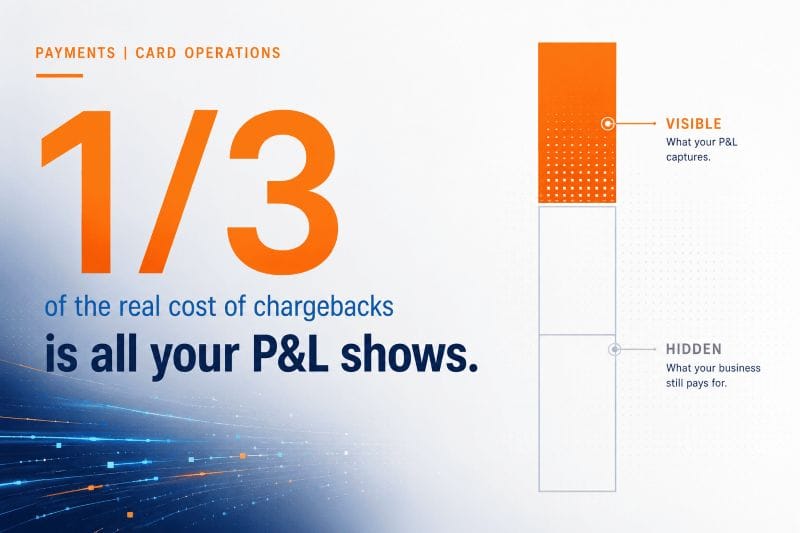
Both, but most companies mistake it for a pure cost decision. The vendors who deliver the best ROI are the ones who treat support as a revenue function — upsell, retention, expansion, referral. Vendors who only optimize for cost typically degrade revenue surface in ways that aren’t visible in the support P&L.
What’s the biggest mistake CMOs make when outsourcing customer support?
Delegating the decision entirely to Procurement and Operations. The CMO owns the brand surface, and customer support is one of the largest brand surfaces in your business. Stay in the decision.
The Bottom Line
The CMO who treats customer support outsourcing as a cost decision will optimize for the wrong scorecard, pick the wrong vendor, and quietly burn 4–8 CSAT points over 18 months. By the time anyone notices, the damage to brand trust and renewal rates will cost 10x what the outsourcing “saved.”
The CMO who treats it as a brand and revenue decision — stays in the room during selection, defines the right vendor criteria, builds the contract for what actually goes wrong, and measures the right KPIs — turns outsourced support into a CX moat.
In 2026, with AI changing the volume mix and customer expectations rising every quarter, this isn’t optional. The brands that get this right will compound advantage. The ones that don’t will spend the next two years rebuilding what got broken.
Customer support isn’t a back-office function. It’s the front door of your brand, just one that most companies have outsourced to whoever passed procurement.
Treat it like the brand surface it actually is.