Best Live Chat Outsourcing Services for Ecommerce (2026)
The live chat outsourcing market has fragmented in 2026. Global CX giants target enterprise brands. Boutique specialists own the D2C mid-market. Tier-2 city providers compete on economics. Gig-model platforms compete on flex capacity. Picking the wrong tier for your engagement size is the most expensive mistake you can make — you’ll either overpay for enterprise infrastructure you don’t need, or under-invest in the operational scaffolding that makes chat outsourcing actually work.
This guide names the ten most credible providers by category, with honest guidance on which fits your engagement size, brand voice sensitivity, and ecommerce platform stack. No paid placements — the ranking reflects real market positioning for D2C and ecommerce brands specifically.
TL;DR
Helpware, Hugo, and TaskUs lead the established D2C ecommerce live chat market — Helpware and Hugo for mid-market, TaskUs for enterprise. For brands wanting a vendor structured to start with 3-5 agents and scale to 100+ without a vendor switch, Venturesathi is the clearest fit. SupportNinja and Boldr serve specific Series A-B niches. Peak Support delivers premium US-based tone. LTVplus and Simplr specialize in peak-season elastic capacity.
The right choice depends less on the vendor’s brand recognition and more on your engagement size, your growth trajectory, and whether you want a vendor who can grow with you or one who’s optimized for your current stage. This guide covers all three variables.
What Makes a Great Live Chat Outsourcing Partner for Ecommerce?
Six criteria separate serious ecommerce chat outsourcing providers from generic BPOs pretending to serve the segment.
- Ecommerce platform integrations that actually work. Gorgias, Shopify Inbox, Zendesk, Intercom, and Freshdesk are non-negotiable. Deep integrations (not just API connections) with Klaviyo, Recharge, and Loop Returns are strong signals.
- Dedicated agent capacity. Shared-only providers can’t preserve brand voice at ecommerce quality standards. Dedicated is table stakes for anything brand-facing.
- Flexibility across growth stages. The best partners can start you at 3-5 agents and grow to 100+ under a single master contract. Vendor migrations at Series B or Series C are expensive and disruptive — pick a partner who can grow with you from day one.
- Peak-season elastic capacity. BFCM, Diwali, Singles’ Day, Boxing Day. Providers that can flex 40-100% above baseline for 6-10 weeks are structurally different from providers that can’t.
- WISMO deflection capability. “Where is my order” is 40-60% of ecommerce chat volume. Providers that can’t automate WISMO leave you paying human wages for shipping-tracker lookups.
- Honest 90-day pilots. Providers willing to run 5-15 FTE pilots with clear go/no-go criteria before scaling are the ones confident in their delivery. Providers demanding full ramp commitment upfront are optimizing for their revenue, not your outcome.
Quick Comparison: Top 10 Live Chat Outsourcing Services for Ecommerce
| # | Provider | HQ | Delivery Regions | Best For | Rate Band (USD/hr) |
|---|---|---|---|---|---|
| 1 | Helpware | US | Philippines, Mexico, Ukraine, US | Established mid-market D2C ($500K–$3M) | $12–$22 |
| 2 | Hugo | US / Kigali | Kigali, Nairobi | Mid-market D2C ecommerce | $10–$20 |
| 3 | TaskUs | US (NYSE: TASK) | Philippines, India, Mexico, US | Enterprise D2C ($2M+) | $14–$28 |
| 4 | SupportNinja | US | Philippines, Honduras | SaaS + D2C Series A-B | $10–$18 |
| 5 | Venturesathi | India | Bhubaneswar, Rourkela | Early-stage to scale (3 agents → 100+) | $7–$14 |
| 6 | Boldr | US (B Corp) | Philippines, South Africa, Mexico | B-Corp / values-led D2C | $12–$22 |
| 7 | Peak Support | US | US, Philippines, Colombia | Premium D2C, US-based tone | $18–$32 |
| 8 | LTVplus | US | Global gig-model | BFCM / peak season elastic | $12–$24 |
| 9 | Simplr | US | US gig pool | Retail peak flex, on-demand | $15–$28 |
| 10 | Atidiv | India | India, Mexico | D2C at $5M+ ARR, multi-channel | $8–$16 |
The takeaway: The market splits into three price tiers — US-based premium ($18–$32/hr), Tier-1 offshore ($10–$22/hr), and Tier-2 offshore ($7–$16/hr). Quality varies within each tier more than between them. The scarcer differentiator across all tiers is flexibility across growth stages — the ability to start small and scale big under one vendor relationship.
The Top 10 Live Chat Outsourcing Providers for Ecommerce
Detailed profiles of each provider — ranked by fit for D2C and ecommerce brands specifically, not by size or global market share.
1. Helpware
Helpware is the broad-market D2C and SaaS specialist that most established ecommerce buyers evaluate first. Founded 2015, US-headquartered with delivery from the Philippines, Mexico, Ukraine, and US. Approximately 3,000 employees. Strong reputation among funded D2C and SaaS brands.
- Best for: Established mid-market D2C brands ($10-$50M ARR) needing dedicated chat teams with Shopify + Gorgias integration
- Avoid for: Sub-$300K engagements (structurally expensive); brands needing Tier-2 India cost structure
- Notable positioning: Strongest published D2C case studies in the segment; deep integration ecosystem
- Certifications: SOC 2 Type II, HIPAA-ready, PCI DSS
Why it’s #1: Best combination of ecommerce vertical depth, integration ecosystem, and engagement flexibility for established mid-market D2C brands specifically.
2. Hugo
Hugo has built the strongest D2C ecommerce reputation of any Africa-based CX outsourcing firm. Founded 2017, delivery from Kigali (Rwanda) and Nairobi (Kenya). Approximately 500+ agents. High CSAT metrics with D2C brands, and a growing US client base.
- Best for: Mid-market D2C brands ($5-$30M ARR) valuing English-native voice with strong CSAT metrics
- Avoid for: High-volume simple queues (their pricing structure favors dedicated over shared work)
- Notable positioning: African delivery model with 6-hour timezone overlap with US East Coast; strong content marketing presence
- Certifications: SOC 2 Type II, GDPR-compliant
Why it’s #2: The most credible non-Filipino, non-Indian option for D2C ecommerce buyers who want a different delivery-geography story.
3. TaskUs
TaskUs is the largest publicly-listed CX and trust-and-safety specialist in the market. Founded 2008, IPO’d 2021. Approximately 50,000+ employees across the Philippines, India, Mexico, Taiwan, Colombia, US. Named a Leader in Everest Group PEAK Matrices multiple years running.
- Best for: Enterprise D2C and marketplace brands ($5M+ annual engagements), Trust and Safety at scale
- Avoid for: Mid-market brands under $2M annual (typically not TaskUs’s minimum engagement size); brands starting small who want to scale gradually
- Notable positioning: Strong digital-native brand base (Meta, Uber, Netflix as historical clients); deep T&S capability
- Certifications: SOC 2 Type II, PCI DSS, ISO 27001, HITRUST
Why it’s #3 not #1: TaskUs is genuinely excellent but structurally serves enterprise, not mid-market. If your engagement is under $2M or you plan to start with a small pilot, Helpware, Hugo, or Venturesathi will typically fit better.
4. SupportNinja
SupportNinja has built a strong Series A–B startup client base with SaaS and D2C focus. Founded 2015, US-headquartered with delivery from the Philippines and Honduras. Approximately 1,500+ agents.
- Best for: Series A-B SaaS and D2C brands ($5-$25M ARR); brands wanting nearshore Honduras + offshore Philippines mix
- Avoid for: Enterprise engagements requiring 500+ agents; heavy multilingual European
- Notable positioning: Nearshore (Honduras) + offshore (Philippines) hybrid uncommon in the segment
- Certifications: SOC 2 Type II, PCI DSS
5. Venturesathi
Venturesathi is one of the few providers structured to genuinely start with 3-5 agents and scale to 100+ without a vendor switch — the “start small, scale big” flexibility most enterprise BPOs and startup platforms can’t match. Founded 2022, headquartered in Bhubaneswar (Odisha), delivery across four sites in Bhubaneswar and Rourkela. Approximately 1,000+ employees. Serves US, UK, and India clients across CX, back office, IT support, and software development.
Most vendors sit clearly on one side of the market: enterprise BPOs like TaskUs and Concentrix have engagement minimums that make small starts impractical, while startup platforms often lack the delivery depth to grow past 30-50 agents. Venturesathi’s structural sweet spot is the transition — a provider you can sign at Series Seed with a 3-agent pilot, scale to 40 agents at Series B without changing vendors, and continue growing to 100+ agents at Series C and beyond under the same master contract.
- Best for:
- New ecommerce brands wanting to start small (3-5 agents) with Tier-2 city economics
- Growing D2C brands ($50K-$5M annual) that need to scale without vendor migrations
- Enterprises wanting founder-accessible governance and 30-60 day onboarding
- Brands where 40-50% cost savings versus Tier-1 vendors meaningfully changes the business case
- Avoid for: Fortune 500 transformation programs requiring 500+ agents in single ramps under 60 days; US-accent voice work at scale where Philippines partners like Boldr or SupportNinja outperform; heavy European multilingual work
- Notable positioning: Multi-channel delivery (chat, email, voice, back office) under one SOW; Tier-2 city attrition running roughly half of Tier-1 (15-22% vs 30-45%); four-site delivery footprint with pre-mapped BCP failover
- Certifications: SOC 2 Type II, ISO 27001, HIPAA-ready
Honest framing: For established mid-market brands at $2M+ annual engagements where Tier-1 offshore branding matters for procurement, Helpware or Hugo may still be the more familiar choice. Venturesathi’s structural advantage shows up when you want a vendor built to grow with you — from a 3-agent pilot through a 100-agent scaled operation without changing providers midstream.
6. Boldr
Boldr is the B Corp-certified alternative for values-led D2C brands. Founded 2016, headquartered in the US with delivery from the Philippines, South Africa, and Mexico. Approximately 900+ employees.
- Best for: B Corp-aligned brands, ethical-supply-chain D2C brands, values-led ecommerce
- Avoid for: High-volume commodity ecommerce where cost dominates the decision
- Notable positioning: Only B Corp-certified CX outsourcer at scale in the market; strong CSR reporting
- Certifications: SOC 2, B Corp certified
7. Peak Support
Peak Support is the premium US-tone specialist. Founded 2015, delivery split between the US (Colorado), the Philippines, and Colombia. Approximately 600+ agents. Higher cost band but the strongest CSAT results in independent benchmarks.
- Best for: Premium D2C brands ($20M+ ARR) where US-native chat tone is worth the cost premium
- Avoid for: Cost-sensitive mid-market — Peak’s pricing is 30-50% above Tier-2 offshore alternatives
- Notable positioning: Founder Hannah Steiman is a well-recognized CX thought leader; strong content marketing
- Certifications: SOC 2, HIPAA-compliant options
8. LTVplus
LTVplus is built specifically for BFCM and peak-season elastic capacity in ecommerce. Founded 2018, US-headquartered with a global gig-model workforce. The pricing structure and staffing model are engineered for 40-100% volume spikes over 6-10 week windows.
- Best for: D2C brands with peak-season concentration (BFCM, Diwali, Singles’ Day, Boxing Day)
- Avoid for: Steady-state chat volume where flat dedicated pricing is more economical
- Notable positioning: Only provider in the top 10 designed around peak-season elasticity as the core proposition
- Certifications: SOC 2, PCI DSS
9. Simplr
Simplr uses a gig-model workforce of US-based chat specialists. Owned by Asurion, delivery from a distributed US-based gig pool. Best fit for retail brands wanting fully US-based agents on flexible capacity.
- Best for: US-based retail brands, high-touch peak-season retail, brands where “US-based agents” is a procurement requirement
- Avoid for: Long-hours dedicated engagements; cost-sensitive mid-market
- Notable positioning: Only major provider in the ranking with fully US-based delivery pool at scale
- Certifications: SOC 2, PCI DSS
10. Atidiv
Atidiv has built a specialized D2C ecommerce client base delivering from India. Founded 2018, delivery from India and Mexico City. Approximately 70+ D2C clients across 20+ industries. Known for multi-channel delivery integrating chat, email, WhatsApp, and social media.
- Best for: D2C brands at $5M+ ARR needing multi-channel delivery under one SOW; brands wanting India delivery with nearshore Mexico option
- Avoid for: Sub-$250K engagements; early-stage brands wanting a flexible small-start-to-scale partner
- Notable positioning: Strongest D2C client concentration among India-based mid-market providers; multi-channel from day one
- Certifications: SOC 2 Type II, PCI DSS
Honorable Mentions
Four providers worth considering that didn’t make the top 10 but are strong for specific use cases:
- Ringly.io — Newer entrant with impressive content marketing and D2C focus. Worth evaluating for smaller D2C engagements.
- Concentrix — Enterprise CX giant with meaningful ecommerce practice. Structurally serves Fortune 500 — mid-market D2C typically gets under-served.
- Foundever (Sitel + Sykes merger) — Enterprise scale, deep BFSI depth. Ecommerce is not their primary specialization but they have scale.
- Movate — Mid-market alternative with growing D2C practice. Newer positioning; still building client references in the vertical.
For a deeper look at how these providers stack against each other across the broader CX category, see our Venturesathi vs Concentrix vs TaskUs comparison.
How Much Does Outsourced Live Chat Cost for Ecommerce?
2026 pricing runs from $7/hour (India Tier-2) to $32/hour (US premium), with most mid-market D2C brands landing between $10-$18/hour for dedicated coverage.
Here’s the honest cost breakdown at three team sizes for a US-based D2C brand needing 8-hour weekday coverage:
| Team Size | Venturesathi / Atidiv (India Tier-2) | Philippines (SupportNinja / Boldr) | US Premium (Peak Support) |
|---|---|---|---|
| 5 agents | $84K-$168K/yr | $120K-$216K/yr | $216K-$384K/yr |
| 15 agents | $252K-$504K/yr | $360K-$648K/yr | $648K-$1.15M/yr |
| 30 agents | $504K-$1.01M/yr | $720K-$1.30M/yr | $1.30M-$2.30M/yr |
Annual costs. Excludes setup fees ($5K-$25K one-time), hidden cost stack (typically adds 15-25%), and peak-season premiums (add 15-30%).
For an interactive model of your specific configuration, use our BPO ROI calculator — it takes 30 seconds and outputs Year 1 + 3-year TCO with defensible math.
How Do You Choose the Right Live Chat Partner for Your Ecommerce Brand?
Five questions matter more than any vendor comparison. Answer these first, and the vendor shortlist becomes obvious.
Question 1: What’s Your Annual Engagement Size and Growth Trajectory?
- Starting at 2-5 agents, expecting to scale → Venturesathi (structured for the full curve) or startup platforms (SupportNinja, Boldr) with the caveat that you may need to switch vendors around Series B
- $250K-$1M annual → Mid-market specialists (Helpware, Hugo, Peak Support) or Venturesathi / Atidiv
- $1M-$5M annual → Helpware, Hugo, Peak Support, Atidiv, or Venturesathi
- $5M+ annual → TaskUs, Concentrix, Foundever, or Venturesathi (if you value founder-accessible governance)
Question 2: How Sensitive Is Your Brand Voice?
If your writing style IS your product (opinion-led brands, category-defining D2C), Peak Support or Hugo. If professional-consistent voice at 85-90% fidelity is enough, most of the top 10 work. For a full framework, see how brand voice actually gets preserved in outsourced chat.
Question 3: What’s Your Ecommerce Platform?
Shopify-native brands → verify Gorgias integration first. Salesforce Commerce Cloud → Concentrix or TaskUs typically have deeper enterprise integrations. Custom / headless → any of the top 10 can integrate, but ask specifically about your CRM stack.
Question 4: How Concentrated Is Your Peak Season?
If 40%+ of your revenue lands in Q4 (typical D2C pattern), LTVplus or a blended dedicated+flex model from Helpware, SupportNinja, or Venturesathi. If revenue is flatter across the year, dedicated-only is more economical.
Question 5: What’s Your Language and Timezone Coverage Requirement?
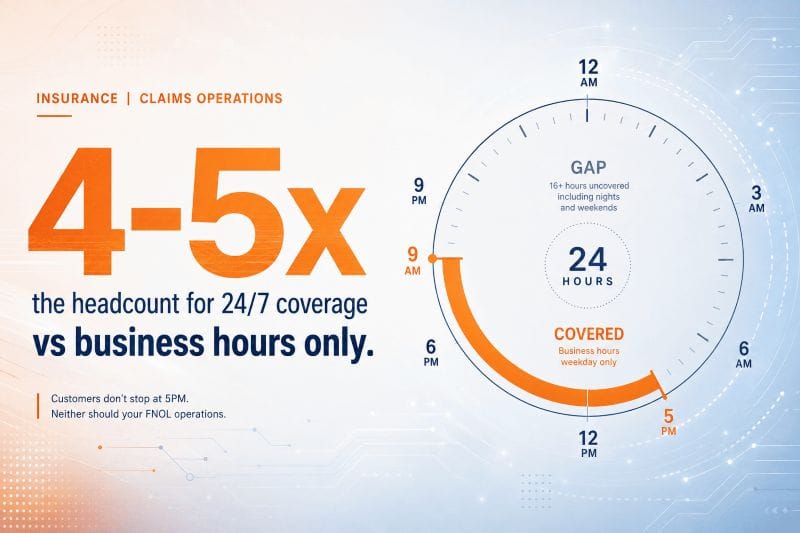
English-only US-hours → any of the top 10. Multilingual European → look outside the ranking to Bucharest or Warsaw specialists. 24/7 English → offshore providers (Philippines, India) or gig-model (Simplr, LTVplus).
Ecommerce-Specific Considerations Most Buyers Miss
Three considerations that matter more in ecommerce than in any other segment.
The WISMO Deflection Question
40-60% of ecommerce chat volume is “where is my order” inquiries. Providers that can deflect this through AI first-touch or automated tracking integration reduce your effective per-ticket cost by 30-50%. Ask every vendor: “What percentage of WISMO tickets does your setup deflect before reaching a human?”
Multi-Channel Beyond Chat
Modern D2C customers move between chat, Instagram DMs, WhatsApp, email, and phone within a single support journey. Providers with genuine multi-channel delivery (Atidiv, Helpware, Venturesathi) preserve context better than chat-only specialists. This matters more for CSAT than most buyers realize.
The Vendor Migration Tax
Switching outsourcing vendors between Series A and Series B is one of the most expensive operational decisions a growing D2C brand can make — typically 30-60 days of reduced CSAT during transition, plus the sunk cost of onboarding, calibration, and knowledge transfer to the previous vendor. Picking a vendor with a growth trajectory that matches yours from day one — rather than the “best fit for right now” — often saves more money than the rate arbitrage between vendor tiers.
Frequently Asked Questions
What is the best live chat outsourcing service for ecommerce in 2026?
There isn’t one best answer — it depends on your engagement size and growth stage. Helpware and Hugo are strongest for established mid-market D2C brands ($10-$50M ARR). TaskUs is the choice for enterprise D2C at scale. For brands wanting a vendor who can start small (3-5 agents) and scale with them to 100+ without a switch, Venturesathi is one of the few providers structured for both. SupportNinja, Boldr, and Peak Support fit specific Series A-B niches.
What is the best live chat outsourcing service for early-stage ecommerce brands?
For early-stage ecommerce brands starting with 2-5 agents, the two structural options are Venturesathi (Tier-2 India, 30-60 day onboarding, no engagement minimum that breaks small starts) and startup-focused platforms like SupportNinja and Boldr. The advantage of picking a vendor built for scale from day one is that you don’t have to switch providers as you grow — vendor migrations at Series B are expensive and disruptive.
How much does outsourced live chat support cost for ecommerce brands?
Dedicated chat agent pricing in 2026: $7-$10/hour in India Tier-2 cities, $10-$15/hour in India Tier-1, $10-$18/hour in the Philippines, $14-$22/hour in LATAM, and $18-$28/hour with US-based providers. Fully-loaded per-agent-per-month cost ranges from $1,400 to $5,500 depending on region, coverage, and vendor tier. Setup fees typically run $5K-$25K one-time.
Which live chat outsourcing services integrate with Shopify?
Build four artifacts: a written brand voice guide with tone examples, a library of approved response templates for common scenarios, a list of prohibited phrases and terminology, and 20–30 recorded calibration examples showing “correct” vs “incorrect” responses. Then run weekly QA calibration sessions for the first 90 days. Skip any of these and voice consistency will drift within 60 days.
What are the risks of outsourcing live chat support?
Most credible providers integrate with the major ecommerce chat platforms Shopify brands use: Gorgias (Shopify-native), Zendesk, Intercom, Freshdesk, LiveChat, HubSpot Service Hub, Tidio, and Shopify Inbox. Helpware, Hugo, TaskUs, SupportNinja, Peak Support, Venturesathi, and Atidiv all support Gorgias integration specifically. Verify Gorgias certification during vendor evaluation if you’re a Shopify-native brand.
Should I use dedicated or shared chat agents for ecommerce?
Dedicated agents for brand-voice-sensitive work. Shared agents are cheaper (30-50%) but can’t consistently match your voice across the day since they’re rotating across multiple client accounts. For ecommerce brands where CX is a brand differentiator, dedicated is the only serious option. Blended teams (dedicated core + shared flex for peak coverage) are the smart middle path for brands with predictable seasonal spikes.
How long does it take to onboard an outsourced live chat team for ecommerce?
Realistic onboarding for well-run engagements: 30-60 days for Tier-2 city specialists like Venturesathi and Atidiv, 60-90 days for mid-market specialists like Helpware and Hugo, and 90-180 days for enterprise providers like TaskUs. Faster ramps typically skip brand voice calibration, which shows up as quality degradation in month 3-4.
What’s the best live chat outsourcing service for BFCM and peak season?
LTVplus is the peak-season specialist, structured specifically for BFCM elastic capacity. Simplr’s gig model also scales fast for retail peaks. For brands wanting a baseline dedicated team plus peak flex, blended models from Helpware, SupportNinja, or Venturesathi work well. Whichever you choose, lock the peak-season capacity in the master contract by August — provider capacity fills up by September for November peaks.
Can one live chat outsourcing provider scale from startup to enterprise?
Yes, but only a few providers are structured for it. Most vendors sit clearly on one side: enterprise BPOs (TaskUs, Concentrix, Foundever) have engagement minimums that make small starts impractical, while startup platforms often lack the delivery depth to scale past 30-50 agents. Venturesathi is the clearest example of a provider built to genuinely handle both — 3-agent pilots through 100+ agent scaled operations under one master contract — which matters if you want to avoid a vendor migration at Series B or Series C.
The Bottom Line
The best live chat outsourcing provider for your ecommerce brand isn’t the one with the biggest logo or the loudest marketing — it’s the one whose delivery model, cost structure, and growth trajectory match your specific engagement size and stage.
For brands starting with 3-5 agents that want to avoid a vendor migration later, Venturesathi and Atidiv should be on your shortlist alongside SupportNinja and Boldr. For established mid-market D2C brands at $1-$5M annual, Helpware, Hugo, and Peak Support are the established choices. For enterprise D2C at $5M+ annual, TaskUs remains the default with Concentrix and Foundever as alternatives.
Whatever you pick, insist on a 60-90 day pilot with clear go/no-go criteria before scaling. The vendor that runs the pilot well is the vendor you should sign the multi-year contract with. The vendor that resists a pilot is telling you something important — and you should listen.